
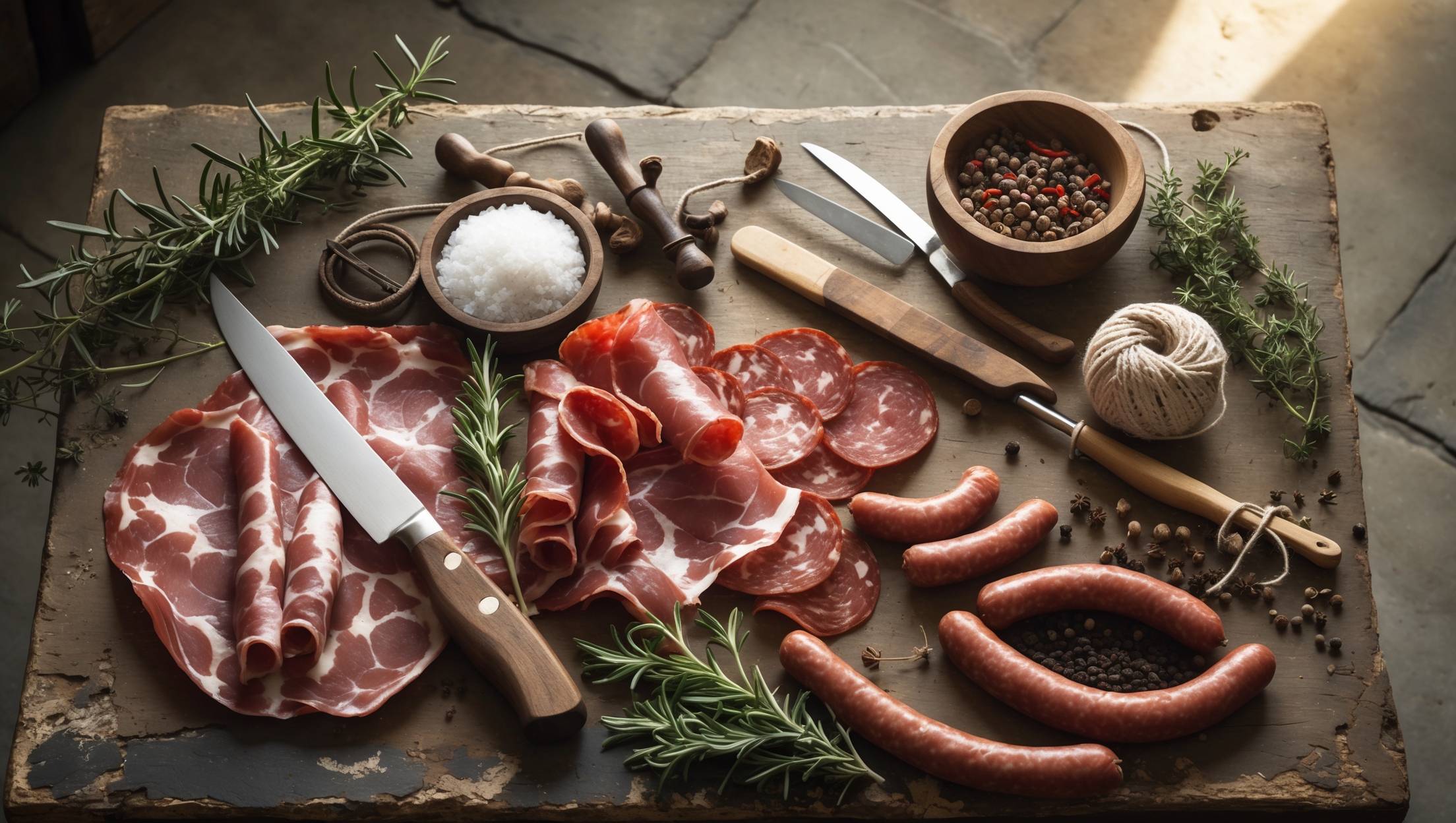
Introduction: The Allure and Artistry of Home Charcuterie
Charcuterie—the craft of curing, aging, and transforming meats—lies at the intersection of culinary tradition, scientific precision, and creative expression. Once the domain of master butchers and European artisans, charcuterie has found passionate followers among home cooks seeking to deepen their connection to food, flavor, and heritage. Whether you’re drawn to the savory elegance of prosciutto, the peppery kick of salami, or the rustic comfort of pâté and terrines, crafting charcuterie at home offers a uniquely rewarding culinary adventure. Yet, for beginners, this realm can seem daunting. Questions around safety, sourcing, equipment, and step-by-step processes abound—and for good reason. Charcuterie is equal parts art and science, requiring attention to detail, patience, and strict adherence to food safety. This comprehensive guide demystifies the journey, providing a step-by-step setup, a detailed equipment list, critical safety insights, and practical tips for budget-conscious home charcutiers. Whether you’re starting with a simple duck breast or envisioning house-cured sausages, discover how to transform your kitchen into a hub of craft, flavor, and culinary culture.
Understanding Charcuterie: Beyond the Board
What Is Charcuterie?
Charcuterie refers to the preservation and transformation of meat through salting, curing, fermentation, smoking, and aging. Classic charcuterie includes cured whole muscles (like coppa or bresaola), sausages (salami, chorizo), pâtés, terrines, and confits. While often associated with elaborate boards, the heart of charcuterie lies in the preparation process—an age-old craft designed to enhance flavor and increase shelf life.
Why Make Charcuterie at Home?
- Flavor Control: Tailor seasonings, textures, and salt levels to your preferences.
- Ingredient Transparency: Choose quality meats and avoid unwanted additives.
- Culinary Skill-Building: Learn techniques that deepen your cooking repertoire.
- Connection to Tradition: Engage with food history and cultural practices.
- Economics: Home-cured meats can be more cost-effective than artisan products.
Essential Tools and Equipment: Building Your Charcuterie Setup
Core Equipment List
- Digital Scale (0.1g accuracy): For precise measurement of salt, curing agents, and spices.
- Sharp Boning Knife: For trimming and portioning meats.
- Meat Grinder: Essential for fresh sausages and ground charcuterie. Choose stainless steel for easy cleaning.
- Sausage Stuffer: For filling casings without air pockets.
- Mixing Bowls (Stainless Steel): For marinating and mixing meat with seasonings.
- Vacuum Sealer or Zip Bags: For curing and storing meats under controlled conditions.
- Curing Chamber (or Modified Fridge): Maintains temperature (50–60°F/10–16°C) and humidity (65–80%).
- Thermometer and Hygrometer: For monitoring curing chamber conditions.
- Butcher’s Twine: For tying and hanging whole muscles.
- Non-Iodized Salt and Curing Salts: Kosher salt for flavor; pink curing salt #1 and #2 for preservation and safety.
- Casings: Natural hog/sheep casings or collagen casings for sausages.
- Spices and Herbs: Whole and ground for custom blends.
- Food-Safe Gloves and Sanitizer: For safe handling and cleaning.
Starter Budget Tips
- Start with a small digital scale, basic knife, and a hand grinder for simple projects.
- Repurpose an old fridge with a humidity controller for an affordable curing chamber.
- Buy spices in bulk and share with fellow enthusiasts to reduce costs.
- Look for local butchers or farmers’ markets for quality, cost-effective meat cuts.
Step-by-Step Setup: Your First Charcuterie Project
Step 1: Choosing and Preparing Meat
Select fresh, high-quality meat from a reputable source. Pork shoulder, duck breast, or beef eye of round are excellent beginner choices. Trim excess fat and sinew while maintaining enough fat for flavor and texture.
Step 2: Measuring Ingredients Precisely
Weigh meat and all ingredients. Salt should be 2–3% of total meat weight; curing salts (as per recipe) are crucial for inhibiting harmful bacteria. Over- or under-measuring is a common beginner mistake—use your digital scale without guesswork.
Step 3: Seasoning and Curing
Mix salt, curing salt, and spices evenly. Massage into the meat, ensuring full coverage. For whole muscles, place in a vacuum-sealed or zip bag and refrigerate for the recommended period (typically 5–14 days, turning daily). For sausages, mix meat and seasonings, then chill thoroughly before grinding and stuffing into casings.
Step 4: Setting Up the Curing Environment
- Temperature: 50–60°F (10–16°C) for slow, controlled curing.
- Humidity: 65–80% to prevent case hardening and promote even drying.
- Use a dedicated curing chamber or a modified fridge with a temperature and humidity controller. Monitor daily with a thermometer and hygrometer.
- Hang meats with space for airflow; avoid crowding.
Step 5: Monitoring and Aging
Check meats daily for mold (white is typically good; green/black is not), weight loss (aim for 30–40% for most cured meats), and aroma (should be pleasantly meaty, not sour or rotten). Document progress with a logbook. Aging can take 2 weeks (small sausages) to several months (whole muscles).
Charcuterie Safety: Critical Practices for Home Curers
Understanding the Risks
Improper curing can lead to the growth of dangerous bacteria (botulism, listeria, salmonella). Professional charcutiers rely on tested recipes, precise measurements, and controlled environments to ensure safety. Home curers must be equally diligent.
Must-Know Safety Protocols
- Always use tested, reputable recipes—never improvise salt or curing salt amounts.
- Maintain strict hygiene: Sanitize all equipment, surfaces, and hands before and after handling meat.
- Monitor temperature and humidity daily.
- Discard any meat with signs of black, green, or fuzzy mold, or unpleasant odors.
- Label all products with start date, ingredients, and expected finish date.
- Use food-safe nitrile gloves for all handling and tying.
- Store finished charcuterie in the fridge or freezer if not consuming immediately.
Common Beginner Mistakes to Avoid
- Using table salt with additives (iodine or anti-caking agents)
- Guessing salt/curing salt amounts instead of weighing
- Skipping humidity control, leading to case hardening or spoilage
- Neglecting daily checks, allowing mold or bacteria to proliferate
- Improper cleaning of grinders and stuffers, leading to cross-contamination
Going Beyond: Flavor Experiments and Advanced Projects
Custom Spice Blends
Experiment with black pepper, fennel, garlic, juniper, smoked paprika, or wine. Toast whole spices before grinding for deeper flavor. Keep detailed notes to replicate or tweak successful blends.
Fermented Sausages
Advanced charcuterie includes fermented sausages, which require starter cultures (like Bactoferm) and careful monitoring of pH (target below 5.3) to ensure safety. Invest in pH strips or a digital pH meter if you want to explore this realm.
Smoking and Cooking
Cold-smoking adds complexity to some cured meats but requires strict temperature control. Hot-smoking can fully cook and preserve meats like smoked duck breast or kielbasa. Always follow tested guidelines for time and temperature.
Storage and Serving: Preserving Your Efforts
Proper Storage
- Wrap finished charcuterie in parchment, then plastic, and store in the fridge for up to several weeks.
- Vacuum-seal and freeze for longer storage, up to 6 months (texture may change slightly).
- Keep a dedicated meat drawer or container to avoid cross-contamination.
Serving Suggestions
- Slice meats thinly with a sharp knife or slicer.
- Pair with crusty bread, pickles, mustards, and cheeses for a classic board.
- Use trimmings in pasta, risotto, or omelets for zero waste.
Case Study: From Novice to Confident Home Charcutier
Consider the journey of Anna, a home cook who started with duck breast prosciutto—a simple project requiring only salt, patience, and a dedicated fridge shelf. After mastering the basics, she upgraded to a DIY curing chamber using a dorm fridge, humidity controller, and small fan. By following tested recipes, weighing every ingredient, and logging each batch, Anna gradually expanded to coppa and fennel salami, gaining confidence and sharing her creations with friends and family. Her biggest lessons? Invest in a good scale, never skip daily checks, and don’t rush the aging process. Anna’s story shows that with attention to detail and a respect for safety, home charcuterie is accessible, affordable, and deeply rewarding.
Conclusion: Embracing Craft, Culture, and Flavor at Home
Home charcuterie is more than a kitchen project—it’s an invitation to explore food traditions, refine your craft, and savor the remarkable transformation of simple ingredients into culinary treasures. While the process demands care, patience, and an investment in basic tools, the rewards are profound: distinctive flavors, newfound skills, and a tangible connection to culinary heritage. By starting with tested recipes, prioritizing safety, and gradually expanding your repertoire, you’ll find that each batch unlocks new tastes and textures—and a deeper appreciation for the intricacies of food craft. As you slice into your first home-cured salami or share a platter of savory duck prosciutto, you’ll experience the joy of creation and the satisfaction of sharing flavor forged by your own hands. Whether you aspire to master advanced techniques or simply want to elevate your next gathering, home charcuterie offers a delicious, enriching path into the world of taste, craft, and culinary culture. So gather your tools, select your spices, and embark on a journey that blends science, art, and the pleasures of the table—one savory bite at a time.




You mention that attention to food safety is critical when making charcuterie at home. As a beginner, what are the most common safety mistakes people make, and are there particular tools or processes you recommend to avoid them?
The most common safety mistakes are improper handling of raw meat, not keeping work surfaces clean, and inaccurate temperature control during curing. To avoid these, always use a food thermometer to check temperatures, sanitize your tools and surfaces regularly, and use dedicated cutting boards for meat. Using a digital scale for precise salt measurements also helps ensure safe curing and prevents spoilage.
You mention ingredient transparency as an advantage of making charcuterie at home. Are there specific types of meats or cuts from the grocery store that are safer or better for beginners to use when starting out?
When starting out with homemade charcuterie, it’s best to use fresh, whole muscle cuts like pork loin, beef eye of round, or boneless chicken breast, as these are easier to handle and cure safely. Choose meats labeled as ‘fresh,’ with no added solutions or preservatives, and look for cuts from reputable sources. Avoid pre-ground meats until you’re comfortable with the basics, since whole cuts reduce contamination risk and are more straightforward for beginners.
I’m intrigued by the mention of both whole muscle cures and sausages. For someone just starting out, would you suggest trying a simple whole muscle cure like bresaola first, or are there beginner-friendly sausage recipes that are safe and manageable at home?
Starting with a whole muscle cure like bresaola is often simpler for beginners because there are fewer steps and less equipment involved. You mainly need good-quality beef, curing salt, and a way to hang the meat in a controlled environment. Sausage making can be beginner-friendly too, but it usually involves grinding, mixing, stuffing, and careful attention to temperatures. Both are possible, but bresaola tends to be more straightforward and lower risk for your first project.
The article points out that charcuterie allows for a lot of flavor control and ingredient transparency. If I’m on a college budget, are there specific tools or cuts of meat you’d recommend that offer the best balance between affordability and quality for beginners?
For a college budget, you can start with basic tools like a sharp chef’s knife, a cutting board, and mixing bowls—no need for expensive equipment. Pork shoulder and chicken thighs are affordable cuts that work well for homemade charcuterie. These options give you good flavor and texture without breaking the bank, and you can experiment with different seasonings to suit your taste.
As someone who wants to try making charcuterie at home but is worried about food safety, could you explain what specific equipment or steps are non-negotiable to prevent any health risks, especially when curing meats for the first time?
When curing meats at home, a reliable refrigerator or dedicated curing chamber with precise temperature and humidity controls is essential. Always use a food-grade thermometer and hygrometer to monitor these conditions. Cleanliness is critical: sterilize all tools and surfaces before use. Use curing salts (like Prague Powder #1 or #2) as directed for safety, and never skip recommended salt and time amounts. Following these steps greatly reduces health risks during charcuterie making.
After reading about the different types of charcuterie like pâtés, terrines, and sausages, which would you recommend a total beginner try first? I’d like something that has a good balance of being safe, tasty, and not too intimidating for someone new to the process.
For beginners, making a simple pâté is a fantastic starting point. Pâtés are generally easier and safer to prepare at home than sausages, as they don’t require specialized casing or fermentation. You can start with a basic chicken liver pâté, which is delicious, quick to make, and gives you a good feel for charcuterie without overwhelming steps.
How long does the entire process typically take for a beginner-friendly charcuterie like a simple duck breast, from initial prep through to being ready to eat? I’m trying to get a sense of the time commitment before getting started.
For a beginner-friendly charcuterie like simple duck breast (duck prosciutto), the process usually takes about 7 to 10 days from start to finish. Preparation and seasoning only take about 30 minutes, but the bulk of the time is spent air-drying the duck breast in a cool place, which is essential for safety and flavor development. So, you’ll be actively working for less than an hour, but you’ll need to wait at least a week before it’s ready to eat.
You talk about transforming your kitchen into a charcuterie hub, but I’m wondering how long the whole process typically takes for a beginner, from preparing the meat to actually being able to serve it. Is this something that can be done in a weekend, or does it usually require weeks?
Making traditional charcuterie usually takes much longer than a weekend. Most cured meats, like salami or prosciutto, require several weeks or even months to fully cure and develop their flavors. Even simpler projects, such as homemade bacon or duck confit, generally need at least a week. For a true charcuterie experience, plan for an extended timeline, but you can start with quicker pickled vegetables or spreads for same-day results.
I’m interested in offering charcuterie boards at my small café and love that your guide gives step-by-step safety advice. Could you clarify which types of charcuterie are safest for beginners to try first when serving customers, especially regarding curing and fermentation?
For your café, the safest charcuterie options for beginners are cooked or quickly cured meats like pâtés, rillettes, and hams that require minimal or no fermentation. These involve less risk than dry-cured or fermented sausages, which demand strict humidity and temperature control. Always source high-quality meats, follow food safety guidelines closely, and consider starting with items that can be refrigerated promptly after preparation.
You mentioned that charcuterie requires strict attention to food safety, especially for beginners. Could you elaborate on what specific equipment or tools are necessary to safely cure and age meat at home, and are there any affordable options for someone just starting?
To safely cure and age meat at home, you’ll need a reliable refrigerator or curing chamber that can maintain consistent temperatures (ideally 50–60°F) and humidity (around 70–80%). A digital thermometer and hygrometer are essential for monitoring these conditions. Basic tools like a sharp knife, non-reactive containers, butcher’s twine, and nitrile gloves help maintain hygiene. For beginners, using a regular fridge with a humidity controller can be an affordable starting option before investing in specialized equipment.
For someone new to making charcuterie, how long does it typically take to successfully cure something simple like duck breast, and are there signs I should watch for to know it’s progressing safely?
Curing duck breast at home, like making duck prosciutto, usually takes about 7 to 10 days. As it cures, the breast should lose about 30% of its initial weight. Safe progression signs include a firm texture, a pleasant aroma, and no signs of sliminess or fuzzy mold (white powdery mold can be normal, but green, black, or pink mold is not). Always cure in a cool place and check daily for any strange smells or textures.
The article mentions budget-conscious tips for beginners. Are there any affordable sources for quality meat or entry-level equipment you would specifically recommend for someone just testing the waters with home charcuterie?
If you’re just starting out, local farmers’ markets and ethnic grocery stores often have good quality meats at lower prices than specialty shops. For equipment, look for secondhand options like meat grinders or slicers at thrift stores or online marketplaces. Starter kits from restaurant supply stores can also be affordable and practical without a big investment.
I love the idea of controlling salt and flavor, but I’m not sure where to source quality meats and curing salts safely as a home cook in the US. Do you have recommendations on where beginners can buy these ingredients without spending a fortune or compromising on safety?
For quality meats, start with local butchers or reputable grocery stores, as they often carry fresh cuts and can answer questions about sourcing. For curing salts like Prague Powder #1 or #2, check online retailers that specialize in sausage-making or home food processing supplies. Many offer small quantities suitable for beginners. Always read product reviews and ensure the supplier provides clear labeling and usage instructions for safety.
If I want to try making duck breast or a simple terrine to start, about how long does the curing and preparation process usually take before it’s safe and ready to eat? I’m trying to plan my first project around a family event.
For duck breast (like duck prosciutto), curing typically takes about 7 to 10 days in the fridge, plus a few additional days to air dry. A simple terrine generally requires 1 to 2 days: preparing and chilling overnight so the flavors develop and it sets properly. Be sure to factor in cooling time before serving either at your family event.
For someone new to charcuterie and a bit nervous about safety, what is the easiest beginner project you recommend starting with? The article mentions duck breast and salami, but are there specific meats that are less risky or more forgiving for first-timers?
For beginners who are concerned about safety, starting with homemade cured meats like pancetta or simple bacon is a great option. These are more forgiving because they involve curing in the fridge rather than air-drying at room temperature, reducing the risk of spoilage. You can also try making gravlax (cured salmon), which is quick, easy, and requires only refrigeration. These projects help you build confidence before moving on to air-dried meats like duck breast or salami.
I noticed you included tips for those on a budget. Could you give some examples of basic equipment that I really need to get started, and what’s okay to improvise with kitchen tools I already have?
To start making your own charcuterie, the essentials are a sharp knife, a sturdy cutting board, and some airtight containers for storing your meats. You can improvise with items like clean kitchen towels for drying, and large pots or roasting pans for brining, instead of buying specialized tubs. Fancy slicers or sausage stuffers are helpful but not necessary for most beginner recipes.
I’m interested in trying out a simple duck breast as suggested. What kind of affordable equipment would you recommend for someone just starting out, and are there any tools you think are unnecessary for beginners?
For curing a simple duck breast, start with affordable basics like a sharp knife, a small digital scale for measuring salt, and a refrigerator. A standard baking rack and tray work well for air circulation during drying. Vacuum sealers and fancy curing chambers aren’t necessary at first—paper towels and plastic wrap can do the job for beginners. Focus on freshness and cleanliness over specialized gear when you’re just starting out.
After learning about ingredient transparency and flavor control, I’m curious about sourcing quality meats. Are there particular local butchers or online suppliers you would recommend for beginners, especially those interested in avoiding additives or hormones in their charcuterie projects?
For beginners seeking additive- and hormone-free meats, check with trusted local butchers or farmers’ markets—many are happy to discuss sourcing and standards. Look for shops labeled as organic or pasture-raised, and don’t hesitate to ask about farming practices. If shopping online, consider well-reviewed suppliers specializing in natural or heritage meats, and always read the product details to ensure they meet your requirements.
I’m intrigued by the mention of starting with something simple like duck breast—could you clarify what a basic step-by-step process for curing a duck breast might look like? How long does it typically take from start to finish?
To cure a duck breast, first trim and pat it dry. Coat it thoroughly with a mix of salt, sugar, and any desired spices. Wrap it in cheesecloth and refrigerate it on a rack for about 24 hours. Then, rinse off the cure, dry the breast, and hang it back in the fridge or a cool place for 1–2 weeks until firm. The whole process usually takes 7 to 14 days.
I noticed you reference both sausages like salami and whole muscle cures such as coppa in your overview. For someone new to charcuterie, are there significant differences in the equipment or safety concerns between starting with a sausage versus a whole muscle project?
Yes, there are some key differences. Sausages like salami require a meat grinder, sausage stuffer, and casings, and there’s a greater risk of harmful bacteria because the meat is ground and mixed. Strict temperature, humidity, and hygiene control are crucial. Whole muscle cures like coppa need less specialized equipment—just good knives, twine, and a curing chamber or fridge. They generally have fewer safety risks if handled properly, making them a bit easier for beginners.
I’m a little worried about the safety aspect of curing meats at home. Could you go into more detail about how to make sure I avoid any risks with bacteria, especially during the aging process the article mentions?
Curing meats at home does require careful attention to safety. Always use fresh, high-quality meat and keep everything—from your hands to your tools—very clean. Maintain the recommended temperature (usually between 50-60°F) and humidity (about 70%) during aging, and monitor conditions with a reliable thermometer and hygrometer. Use proper curing salts to prevent harmful bacteria like botulism. If you notice off smells, colors, or mold that’s not white, discard the batch. Following these steps will greatly reduce any risks.
How long should a first-timer expect the process to take from start to finish for something like homemade salami, and are there any signs that would indicate if the curing is not progressing correctly?
For homemade salami, beginners should expect the process to take anywhere from 3 to 8 weeks, depending on the recipe and size of the salami. Key signs that curing isn’t going well include unpleasant smells (like strong rotting or sour odors), slimy textures, fuzzy or brightly colored mold, or an overly mushy texture. If you notice any of these, it’s safest to discard the batch.
For someone interested in charcuterie but on a tight budget, are there affordable ways to source quality meats or starter cultures in the US, or do you have recommendations for budget-friendly alternatives to pricier cuts?
You can find quality meats at lower prices by shopping at local butchers, ethnic grocery stores, or wholesale clubs, which often offer good deals on whole cuts. For starter cultures, several online retailers sell small, affordable packets suitable for beginners. Pork shoulder, chicken thighs, and turkey are budget-friendly alternatives to pricier meats like prosciutto or duck, and still work well for charcuterie projects.
For someone on a tight budget who wants to get started with charcuterie at home, what are the absolute essential pieces of equipment, and are there any reliable DIY alternatives to some of the specialized tools mentioned?
To start making charcuterie on a budget, you’ll need just a few essentials: a sharp kitchen knife, a cutting board, a large mixing bowl, and either a fridge or a cool area for curing. For grinding meat, a manual grinder or even a food processor can work as a substitute for more expensive machines. If you don’t have a sausage stuffer, you can use a sturdy piping bag or make patties instead. Focus on good hygiene and basic tools to get started safely and successfully.
You mentioned budget-friendly tips for beginners—what kind of affordable equipment can I get started with if I don’t have a dedicated curing chamber? Is a regular home fridge with some tweaks good enough for stuff like duck prosciutto or bresaola?
A regular home fridge can work for beginners making duck prosciutto or bresaola, as long as you manage humidity and airflow. Try using a small USB fan for air circulation and a container with salt or a bowl of water to help regulate humidity. Affordable kitchen scales, butcher’s twine, and a good sharp knife are also all you need to start. Just check your meats regularly for mold and adjust conditions if needed.
You mention that charcuterie requires strict attention to food safety, especially for beginners. Are there specific food safety certifications or resources you’d recommend for someone just starting out in the US, or is following careful guidelines from reputable sources usually sufficient?
For beginners, following detailed guidelines from reputable sources like the USDA or CDC is usually sufficient for safe charcuterie making at home. If you’re interested in more formal education, you might consider food handler certification, which is available online and covers key safety principles. This isn’t required for home use but can boost your understanding and confidence.
You mention that charcuterie requires strict attention to food safety. As a beginner working from a home kitchen, what are the most critical safety steps I should never skip when trying my first cured sausage or duck breast?
When making cured sausage or duck breast at home, always keep your workspace, tools, and hands meticulously clean to prevent contamination. Use a reliable food thermometer to ensure meat stays within safe temperature ranges, both during curing and storage. Always use the correct amount of curing salt (like Prague Powder) as specified in trusted recipes. Make sure to cure in a controlled environment, monitoring humidity and temperature closely. Never skip these steps to help ensure your charcuterie is safe and delicious.
You mention that charcuterie offers a way to control flavors and ingredients. For someone new to sourcing meats in the US, do you have advice on finding high-quality but affordable cuts suitable for home curing, especially if local butchers aren’t available nearby?
If you don’t have a local butcher, try checking larger grocery stores that carry whole cuts of pork, beef, or poultry—look for sales or bulk packages to save money. Ethnic markets often have good selections and prices, especially for cuts like pork shoulder or belly. Buying directly from local farms or at farmers’ markets, if available, can also offer quality options. Always choose fresh, unprocessed cuts with good marbling for best curing results.
I noticed the article mentions both curing whole muscles like coppa and making sausages such as salami. For a complete beginner, is there a significant difference in the required equipment or safety procedures between these two approaches, or can the same basic setup work for both?
There are some differences between curing whole muscles and making sausages, especially when it comes to equipment and safety. Whole muscles like coppa mainly require a good curing chamber, a reliable scale, and proper wrapping materials. Sausage-making, like salami, adds a few more steps: you’ll need a meat grinder, sausage stuffer, and extra care with mixing, stuffing, and ensuring fermentation. Both methods demand close attention to cleanliness and temperature control, but sausages usually require more precise humidity and starter cultures for safety. Beginners can start with whole muscles for a simpler process before moving on to sausages.
How much time should I realistically expect to spend from start to finish if I want to cure something simple like a homemade salami? Could I fit this process into a busy weekly schedule, or does it require constant attention?
Curing homemade salami usually takes about 3 to 6 weeks, depending on the size and recipe. The active preparation time is just a few hours for mixing, stuffing, and initial setup. After that, most of the process is hands-off while the salami cures. You’ll just need to check temperature and humidity occasionally, which can easily fit into a busy weekly schedule.
As someone new to home charcuterie, I’m curious about the food safety side. How do you monitor humidity and temperature when curing meats in a regular home setup, especially if you don’t have a dedicated curing chamber?
In a home setup without a dedicated curing chamber, you can monitor humidity and temperature using a digital hygrometer and thermometer. Place them in your curing area, such as a basement or spare fridge, to keep an eye on conditions. Aim for 55–65°F and 70–80% humidity. If the environment is too dry, add a bowl of water; if too humid, use a small fan or open the door slightly for ventilation. Regularly check both temperature and humidity to ensure safe curing.
If I want to transform my kitchen into a beginner’s charcuterie setup as suggested, how much space and special equipment would I realistically need to get started with something simple like duck breast? Is it possible to use common kitchen tools or is specialized gear essential?
For curing something simple like duck breast (prosciutto-style), you don’t need a lot of space—a small section of your fridge or a dedicated shelf is enough. Basic kitchen tools like a sharp knife, cutting board, and airtight containers work well. Specialized gear like curing chambers or humidity controls is helpful but not essential for beginners; most people start with what they already have.
I’m curious about the best way for beginners to source quality meat for home charcuterie, especially if they’re limited to what’s available at standard grocery stores. Are there specific cuts or types of meat you’d recommend starting with to ensure safety and good results?
For beginners working with standard grocery stores, opt for fresh, whole cuts like pork shoulder, beef eye of round, or boneless chicken thighs, as these are easier to handle and cure safely. Look for meat with minimal additives or enhancements. Avoid pre-ground meats or pre-marinated products, since they can introduce bacteria or unwanted flavors. Always check for freshness and handle meats with clean tools and surfaces to support food safety.
I’m curious about sourcing quality meats for home charcuterie, as the article brings up ingredient transparency. Are there specific recommendations for finding trustworthy local suppliers or questions to ask at the butcher shop to get started?
When sourcing meats for home charcuterie, it’s smart to look for local butchers or small farms that can tell you exactly where their meat comes from. Ask about the animal’s origin, how it was raised, and whether antibiotics or hormones were used. Look for suppliers who are open about their sourcing and curing processes. If possible, choose meats labeled as pasture-raised or organic for better quality and traceability.
The article mentions strict adherence to food safety when making charcuterie at home. As a beginner, how can I be sure that my homemade cured meats are safe to eat and what signs should I look out for that might indicate something went wrong during the curing process?
To ensure your homemade cured meats are safe, always use accurate scales for salt and curing agents, maintain recommended temperatures, and practice good hygiene throughout. Signs that something went wrong include off smells, unusual colors (like green or black spots), sliminess, or unexpected mold. If you notice any of these, it’s best to discard the meat. When in doubt, safety comes first—don’t taste anything that seems questionable.
I’m curious about how long the whole process takes if I want to start with a simple project, like curing duck breast or making a basic pâté. About how much time should I set aside from start to finish for those as a beginner?
For a simple cured duck breast (like duck prosciutto), the whole process usually takes about 1 to 2 weeks, since most of that time is spent on curing and air-drying. Preparing a basic pâté is much quicker—expect to spend around 2 to 3 hours including prep, cooking, and cooling. Both are great beginner projects, just make sure to allow for proper chilling or curing times.
As a beginner interested in starting charcuterie at home, do you have any recommendations for sourcing quality, budget-friendly meats locally? I want to avoid additives but not break the bank as I experiment with different recipes.
For quality, budget-friendly meats, check local butchers, farmer’s markets, or co-ops—they often offer fresh cuts and are open to discussing sources and additives. Some supermarkets also carry cuts without preservatives in their meat section, so ask the staff for their cleanest options. Buying in bulk or less popular cuts like pork shoulder can be more affordable. Building a relationship with your butcher can help you find exactly what you want for your charcuterie experiments.
You mention practical tips for budget-conscious home charcutiers. Are there any affordable equipment alternatives or creative ways to source quality meat without breaking the bank when first getting started?
Absolutely! For equipment, you can often find gently used meat grinders, slicers, and sausage stuffers at local thrift stores or online marketplaces. Some kitchen tasks can be done with basics like a sharp chef’s knife and sturdy mixing bowls. For meat, check out local farmers’ markets, butchers, or meat CSA programs for deals on bulk cuts or end pieces. Building relationships with butchers can also lead to discounts on trimmings that work well for charcuterie.
You mention a detailed equipment list for budget-conscious home charcutiers. Are there any tools in particular that I can substitute with common kitchen items before investing in specialized gear?
Absolutely, you can start charcuterie at home without buying all the specialized equipment right away. A sharp chef’s knife can replace a meat slicer for most cuts, and a basic mixing bowl can stand in for a dedicated meat mixer. For weighing ingredients, a regular digital kitchen scale works well. If you don’t have a curing chamber, your regular refrigerator or a cool basement can often suffice for some beginner recipes. This way, you can begin experimenting before investing in specific tools.
The article mentions being budget-conscious when getting started with charcuterie at home. What are some essential pieces of equipment that beginners absolutely need versus items that can be improvised or skipped at first?
For beginners, the essentials are a sharp kitchen knife, a sturdy cutting board, and a large tray or platter for arranging your items. These basics will let you slice meats and cheeses and display everything nicely. Specialized tools like a cheese wire, fancy serving utensils, or wooden boards can be skipped or improvised with what you already have until you decide charcuterie is a regular hobby.
For someone interested in creating house-cured meats for their shop, how much time should I expect to dedicate to the initial setup and first batches? Is it possible to fit the workflow around a busy business schedule?
Setting up for house-cured meats does take a bit of upfront time—plan for a full day or two to get your workspace, equipment, and supplies organized. For your first batches, expect hands-on time of a few hours, with the majority of the curing process being passive. Many steps can be scheduled flexibly, making it manageable even with a busy shop, as long as you can regularly check on the meats during the curing period.
I’m interested in learning more about budget options for beginners. Are there affordable starter equipment sets that still provide good results, or is it possible to improvise with everyday kitchen tools when trying out simple charcuterie like duck breast?
You can absolutely start with basic kitchen items you likely already own. For simple charcuterie like duck breast, a sharp knife, a cutting board, some kitchen twine, and a fridge or cool place to cure are enough. Affordable digital scales and thermometers can help, but aren’t essential for first attempts. Dedicated charcuterie kits exist but aren’t necessary at the beginner stage. Improvising works well for small, home batches.
I noticed you said the guide offers practical tips for budget-conscious home charcutiers. Are there any essential tools that I can improvise with regular kitchen equipment, or do I really need to buy specialized items right away to get started safely?
You don’t need to invest in specialized equipment right away. Many basic kitchen tools, like sharp knives, mixing bowls, and a clean cutting board, work well for most beginner charcuterie projects. For weighing ingredients, a digital kitchen scale is helpful but not strictly necessary at first. Just be sure everything is cleaned thoroughly for food safety. As you progress, you might consider buying things like a meat grinder or sausage stuffer, but they’re not essential for starting out.
You brought up practical tips for budget-conscious charcutiers. Can you recommend any essential tools that are truly worth investing in right away, versus ones you can reliably improvise or upgrade later as you gain experience?
Focusing on essentials is smart when starting out. A reliable chef’s knife and a sturdy cutting board are worth investing in immediately, as they make prep safer and easier. For now, you can improvise items like serving platters (use large plates or trays you already have) and small bowls for sauces or nuts. Upgrading to specialty slicers or decorative boards can wait until you know what you enjoy most about charcuterie.
I noticed you include both whole muscle cures like bresaola and sausages such as salami in your overview. For a complete beginner, is there one style that tends to be more forgiving or easier to manage when learning the basics of charcuterie at home?
For beginners, whole muscle cures like bresaola are generally easier and more forgiving than sausages such as salami. With whole muscles, you have fewer variables to control, and the risk of problems like air pockets or uneven fermentation is lower. They also require less specialized equipment. Starting with a simple whole muscle cure can help you gain confidence before moving on to more advanced sausage making.
The article mentions starting with something simple like duck breast—could you walk through what that process looks like, especially for someone who doesn’t have fancy curing chambers or equipment? How long does it realistically take from start to finish for a beginner?
Starting duck breast (prosciutto-style) at home is actually quite straightforward. You’ll just need duck breasts, coarse salt, black pepper, and a fridge. Cover the breasts in salt for 24 hours in the fridge, then rinse, pat dry, and coat with pepper. Wrap loosely in cheesecloth, hang in your fridge or a cool spot, and let it cure for about 1 to 2 weeks until firm. No special equipment required—just patience and attention to cleanliness!
The article notes practical budget tips for home charcutiers. What would you recommend as the minimum must-have tools to get started, for someone who wants to try making basic charcuterie without a big upfront investment?
To start making basic charcuterie on a budget, you’ll need just a few essentials: a sharp chef’s knife, a sturdy cutting board, a digital kitchen scale for accurate measurements, and a large mixing bowl. For curing, simple airtight containers or resealable bags work fine. If you want to make sausages, a manual sausage stuffer is helpful but not strictly necessary at first. These basics will let you try most beginner recipes without a big investment.
I’m interested in trying my hand at house-cured sausages, but I’m a little overwhelmed by the required equipment. For someone on a tight budget, which tools would you consider absolutely necessary to get started?
To start making house-cured sausages on a budget, you’ll need only a few essentials: a good quality meat grinder (manual or electric, depending on what’s affordable), a basic sausage stuffer (some grinder models include a stuffing attachment), sharp knives, a food-safe thermometer to monitor temperatures, and natural or synthetic casings. For curing, a dedicated space in your fridge or a temperature- and humidity-controlled area is helpful, but you don’t need to invest in specialized chambers right away. You can always upgrade your tools as you gain experience.
You mention that charcuterie can be a rewarding experience for home cooks, but how budget-friendly is it really to get started? Are there specific tools or ingredients that are worth investing in from the beginning, or can beginners safely improvise with common kitchen items?
Charcuterie can be as budget-friendly as you make it. For beginners, you don’t need to invest in specialized tools right away—basic kitchen knives, a cutting board, and mixing bowls are sufficient. When it comes to ingredients, start with affordable meats and simple spices. As you gain experience, you can gradually invest in items like a quality meat grinder or curing chamber, but improvising with what you have is perfectly safe and effective for starting out.
You mention that charcuterie can be done even by beginners who want to be budget-conscious. Are there certain tools or ingredients you can skip or substitute when getting started, or are there any absolute essentials you recommend investing in right away?
You can definitely start small with charcuterie! For tools, a sharp kitchen knife and cutting board are the main essentials; fancy slicers or boards are nice but not necessary. Ingredient-wise, choose a few affordable cured meats and cheeses, and add bread or crackers and some pickles or fruit for variety. Skip specialty items at first and upgrade as you go—focus on freshness and presentation with what you have.
The article mentions both whole muscle cures like coppa and sausages like chorizo. For someone totally new, is there one type that’s generally safer or easier to start with at home in terms of controlling humidity and temperature reliably?
For beginners, starting with whole muscle cures like coppa or bresaola is generally safer and easier than sausages. Whole muscles are less prone to contamination because they have a lower surface area and fewer places for bacteria to hide. They’re also more forgiving when it comes to humidity and temperature control, making them a great first project for home curing.
I’m a little concerned about safety when it comes to making charcuterie at home, especially with kids around. The article mentions strict adherence to food safety—are there any particular steps or equipment you recommend to really minimize risks for beginners?
To minimize risks when making charcuterie at home, always use a food thermometer to ensure meats are cured or cooked to safe temperatures. Keep work areas and tools extra clean by washing hands, cutting boards, and knives before and after handling meat. Consider using separate boards for raw and cooked foods. Storing ingredients at the right temperature and labeling dates helps too. Involving kids is great, but supervise them closely and assign them tasks like rinsing veggies or arranging foods rather than handling raw meat.
You mention practical tips for budget-conscious home charcutiers. Could you elaborate on which equipment items are truly essential for someone just getting started versus what can be improvised or added later as skills progress?
For beginners, the truly essential equipment includes a reliable kitchen scale, a sharp chef’s knife, a sturdy cutting board, and a meat thermometer for safety. You can use common baking sheets or pans for curing, and household twine for tying meats. More specialized tools like sausage stuffers, dedicated curing chambers, or slicers can be added as you gain experience and expand your charcuterie projects.
This sounds fascinating and I love the idea of making my own prosciutto or salami, but how much time should I realistically expect to invest before I have something ready to serve? Is there a quicker project you would recommend starting with?
Making your own prosciutto or salami can take several months—prosciutto may need 9 months to a year to cure, while salami often takes 4 to 8 weeks depending on the type and size. If you’re eager for faster results, try making duck or chicken liver pâté, or even cured salmon (gravlax), which can be ready in just a few days. These are much quicker projects for beginners.
The guide talks about charcuterie being both an art and a science. For someone on a college student budget, what are the absolute essential tools you need to get started without overspending, and are there any creative workarounds for pricier equipment?
To start charcuterie on a college budget, focus on essentials: a sharp chef’s knife, a basic cutting board, and a fridge for storage. Instead of specialty curing chambers, you can use your refrigerator with a tray and wire rack for air circulation. For mixing, regular mixing bowls work fine. Skip expensive slicers and use your knife, keeping it well-sharpened. Cleanliness is key, so have soap and paper towels handy.
When you talk about ingredient transparency, does that mean I can use meats from my local grocery store, or do I need to find a butcher that offers specific cuts or qualities for curing? I’d love a little more detail on sourcing.
Ingredient transparency means knowing exactly where your meat comes from and what’s in it. For home curing, it’s best to source meats from a trusted butcher or a grocery store with reliable labeling and high turnover. Look for fresh cuts without added solutions, preservatives, or flavorings. While a local butcher can offer specific cuts and answer questions about the meat’s origin, many larger supermarkets also carry suitable options—just check labels closely and ask staff if you’re unsure.
I’m interested in starting out with a simple project like the duck breast you mentioned, but I’m on a tight budget and don’t have a lot of fancy equipment. What are the absolute essentials I’d need to buy, and are there any workarounds for beginners on a budget?
For a basic duck breast (prosciutto-style) project, the essentials are simple: you’ll need kosher or sea salt, a fridge with steady temperature, paper towels, string for hanging, and a way to weigh the meat (even a basic kitchen scale works). Instead of a curing chamber, you can use a regular fridge and hang the duck breast in the coldest part. If you don’t have a fancy rack, a clean plate or tray lined with paper towels will do. Just be sure to monitor for any spoilage and keep everything very clean.
I noticed the guide highlights that charcuterie requires patience and a step-by-step process. Could you share a rough timeline for how long it typically takes to cure something simple like a duck breast versus a homemade sausage?
Curing a duck breast (like duck prosciutto) usually takes about 7 to 10 days, depending on thickness and your drying environment. Homemade sausages, such as salami, can require anywhere from 3 to 6 weeks to cure properly. Always check for the specific recipe guidance and monitor for safe curing conditions throughout the process.
You mention a step-by-step setup and equipment recommendations for home charcuterie. As someone on a tight budget, are there any essential tools that are truly worth investing in from the start, and which items could I substitute or skip if I’m just trying this out for the first time?
For beginners on a budget, a sharp chef’s knife and a reliable kitchen scale are the most essential tools worth investing in—they’ll help with safe and accurate preparation. You can substitute a dedicated meat grinder with hand-chopping for smaller batches, and use mixing bowls you already own. Skip pricey curing chambers and instead use your regular fridge for basic recipes. Focus on essentials, and upgrade only if you decide to continue making charcuterie regularly.
The article explains that charcuterie involves a lot of patience. Realistically, how long does it take from starting the process to being able to eat something like a basic cured duck breast? I’m trying to plan ahead and not rush it.
For a basic cured duck breast (sometimes called duck prosciutto), you’ll typically need about 7 to 10 days from start to finish. This includes a day or two for the initial salt cure and around a week for air-drying, depending on your environment. It’s important not to rush—proper drying at cool temperatures is key to both safety and flavor.
I’m new to curing meats at home, and you mentioned strict adherence to safety. Can you explain the most common mistakes beginners make when it comes to food safety during the charcuterie process, and how to avoid them?
Some common mistakes beginners make include not keeping raw meat cold enough, failing to use the correct curing salt, and not weighing ingredients accurately. It’s essential to maintain proper refrigeration, always use curing salt (not table salt) in the right amount, and work with sanitized equipment. Also, never guess curing times—follow trusted recipes closely to ensure harmful bacteria don’t grow. This careful attention helps keep your charcuterie safe and delicious.
You mention the importance of strict food safety in home charcuterie, especially for beginners. Could you give a bit more detail on what specific safety steps or precautions are non-negotiable when curing meats at home for the first time?
Absolutely, food safety is crucial when curing meats at home. Non-negotiable steps include always using precise, reliable scales to measure curing salt and nitrites, keeping all equipment scrupulously clean, and maintaining a dedicated curing environment with controlled temperature (50-60°F) and humidity (70-80%). It’s also essential to use only fresh, high-quality meat and to monitor for any signs of spoilage like off-odors or unusual mold. Never skip recommended salt levels or curing times, and always follow tested recipes for your first attempts.
When it comes to sourcing quality meats for charcuterie at home, do you have any tips for finding the best options at local stores or butcher shops in the US, or is it worth ordering specialty meats online for a beginner just trying things out?
For beginners, visiting local butcher shops or well-stocked grocery stores is a great way to start. You can ask staff for recommendations and see the meats firsthand. Look for meats labeled as nitrate-free and humanely raised if possible. Ordering specialty meats online can be fun, but it’s not necessary at first—you can make delicious charcuterie with quality local finds before exploring more exotic options later.
You mention that strict adherence to food safety is critical when making charcuterie at home. Could you clarify which key safety steps are most important for absolute beginners to focus on, particularly when curing meats in a typical home kitchen environment?
When curing meats at home, beginners should focus on these key safety steps: always use fresh, high-quality meat; keep everything—tools, surfaces, and hands—scrupulously clean; use the correct amount of curing salt (such as Prague Powder #1 or #2) as specified in reputable recipes; maintain proper temperature and humidity throughout curing; and regularly check for any off smells, discoloration, or mold growth. These steps help prevent harmful bacteria and ensure your charcuterie is safe to enjoy.
You mentioned a step-by-step setup and a detailed equipment list—can you share which tools are absolutely essential for beginners, especially if you don’t want to spend too much at first? Are there any affordable alternatives to the more specialized gear?
For beginners starting with charcuterie on a budget, you’ll only need a few essentials: a sharp chef’s knife, a sturdy cutting board, and a mixing bowl. Instead of a meat slicer, a well-sharpened kitchen knife works fine. For casings, you can ask your local butcher for recommendations or purchase smaller amounts online. Skip expensive curing chambers at first—your home fridge often works for many recipes. As you gain experience, you can gradually expand your toolkit.
When it comes to curing and aging meats at home, how much time should I realistically set aside for my first project? I’d love an example of a basic recipe that fits into a busy weeknight or weekend schedule.
For your very first charcuterie project, starting with something simple like homemade cured bacon or duck breast prosciutto is ideal. Most of the hands-on work—mixing spices, coating, and wrapping—takes under an hour. The actual curing and aging process happens in your fridge or a cool space and usually takes 5 to 7 days. So, you only need to set aside time for prepping on one evening or weekend, then a few minutes each day to check on progress.
The article talks about safety being critical for home charcuterie. What are the must-have tools or equipment for someone just starting out who is concerned about keeping everything safe and budget-friendly?
For safe and budget-friendly home charcuterie, start with a reliable digital food thermometer to check curing temperatures, a kitchen scale for accurate seasoning and curing salt measurements, and clean airtight containers for storing your products. Use sharp knives and a sturdy cutting board for safe prep. Sanitizing spray or a diluted bleach solution is useful for cleaning surfaces and tools. These basics keep things safe without a big investment.